
School: CAPS/Blue Valley High School
Class: Civil Engineering and Architecture
Instructor: Miles Riley
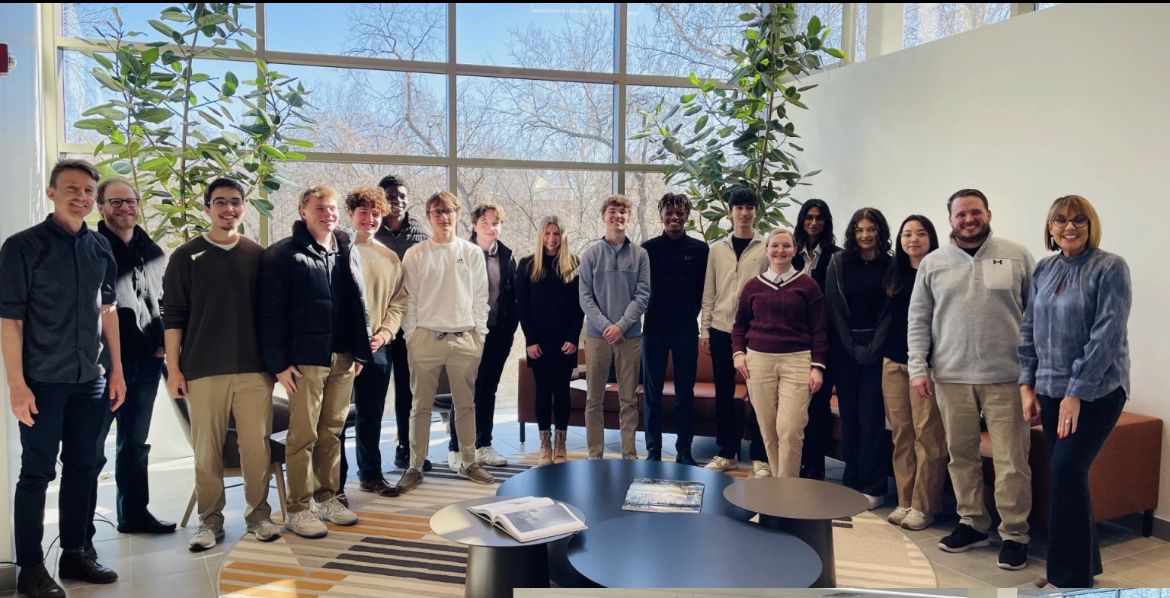
Client: DLR Group
Problem: After 20 years, the office needs updating. Culturally, DLR Group staff would like to encourage an equitable and progressive work environment that has the spaces and technology to support it. Architecturally, DLR Group staff is willing to move towards smaller workstations or to “hot desking” to allow space for flexible amenity spaces such as phone rooms, team rooms, pin-up areas, and lounges that encourage collaboration and cross-pollination.
Summary of Project
For this project, students used the first three phases as the primary structure of the project. Pre-Design, Schematic Design, and Design Development. They had check-ins loosely as a “phase” to help guide their thinking, though the work of schematic design flowed directly into design development as they continued to work through their drawings and began rendering spaces.
Key Takeaways or Advice
In a small group project such as this, make sure to formulate teams based on skill sets. Don’t let all the experienced designers work together while the newer kids try to figure it out among themselves. Some groups struggled and lacked the confidence to generate a design because they already had in their head that it was not going to be as good as the experienced students.
Learning Standards
Students will create a presentation to share your ideas with slides, diagrams, drawings, perspectives, renderings, and whatever else you need.
This presentation will be made to employees from DLR Group as well as teachers and staff of Blue Valley CAPS in the DLR Group offices.
The presentation might also include the drawings from your drawing set with an index determined by your teacher.
Over the course of the project, you will have checkpoints with professionals from DLR Group to ask questions and check your progress.
Designers work in phases to organize their work and create deadlines to make sure the project can be done on time.